
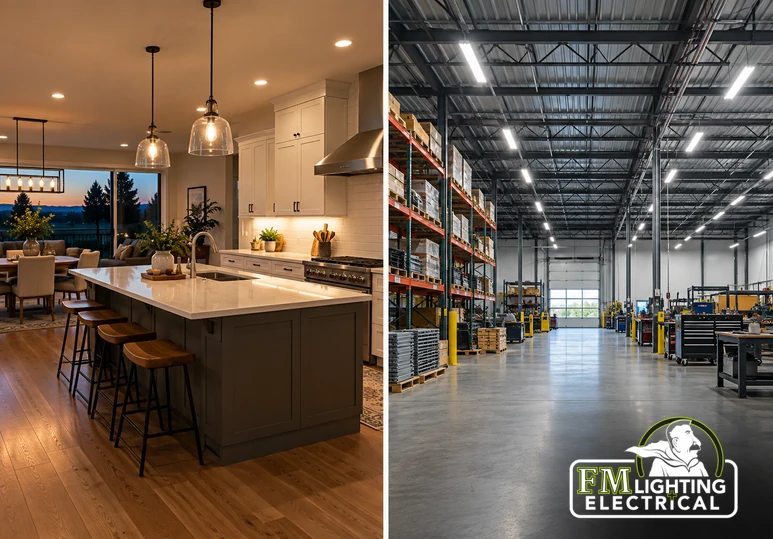
WHAT RESIDENTIAL ELECTRICAL SERVICES INVOLVE
Residential electrical services focus on the systems that power everyday life at home. Most homes use single-phase power, and the work is typically planned around the household's comfort, safety, and convenience.
Common projects include adding outlets, installing lighting, upgrading panels, wiring renovations and basement developments, and troubleshooting issues such as tripping breakers or flickering lights. Work often takes place while people are living in the home, so scheduling and tidiness matter.
Typical residential electrical work can include:
- Outlets and switches
- Lighting installation
- Panel upgrades
- Renovation wiring
- Basement development
- Dimmers and controls
- Exterior lighting
- Troubleshooting
Homeowners often value clear communication, respect for their space, and work that fits their schedule and budget.
WHAT COMMERCIAL ELECTRICAL SERVICES INVOLVE
Commercial electrical services typically deal with larger buildings and heavier demands. Offices, retail stores, warehouses, and industrial spaces may use three-phase power, larger panels, and more complex systems.
Projects often include lighting for large areas, parking lot and exterior lighting, signage, emergency lighting, and equipment connections. Because a business depends on its electrical systems, planning around operating hours and minimizing downtime is often a priority.
Typical commercial electrical work can include:
- Large-scale lighting
- LED retrofits
- Parking lot lighting
- Signage power
- Emergency lighting
- Equipment wiring
- Panel and distribution work
- Preventive maintenance
Commercial work also tends to involve more coordination, including building managers, tenants, and other trades, along with documentation and phased scheduling on larger projects.
KEY DIFFERENCES AND CHOOSING THE RIGHT HELP
The main differences come down to scale, systems, scheduling, and requirements.
Residential jobs are usually smaller and focused on household needs. Commercial jobs often involve larger equipment, higher electrical loads, and more coordination. Requirements and permits can vary by project type and location, so it is wise to confirm what applies to your property before work begins.
Points to compare include:
- Size of the property
- Type of power supply
- Electrical load
- Scheduling needs
- Downtime concerns
- Permit requirements
- Maintenance needs
- Budget
Whatever the property, electrical work should be handled by qualified professionals. Faulty wiring can create safety risks, so it is not a place to cut corners or attempt complex work without proper training.
FM Lighting & Electrical can assess your property and recommend practical options for both homes and businesses. Contact FM Lighting & Electrical to discuss electrical services in Calgary that fit your needs.
FAQs
Q: WHAT IS THE DIFFERENCE BETWEEN RESIDENTIAL AND COMMERCIAL ELECTRICAL SERVICES?
A: Residential work focuses on household systems such as outlets, lighting, and panels, while commercial work typically involves larger buildings, heavier loads, and more coordination. The right choice depends on the type and size of your property.
Q: DO I NEED A LICENSED PROFESSIONAL FOR ELECTRICAL WORK?
A: Electrical work should be completed by qualified professionals, and permit requirements can vary by project. Confirm what applies to your job before starting, since faulty wiring can create safety risks.
Q: CAN ONE COMPANY HANDLE BOTH HOME AND BUSINESS ELECTRICAL WORK?
A: Many electrical companies serve both. FM Lighting & Electrical can discuss electrical services in Calgary for homes and businesses and recommend options based on your property.
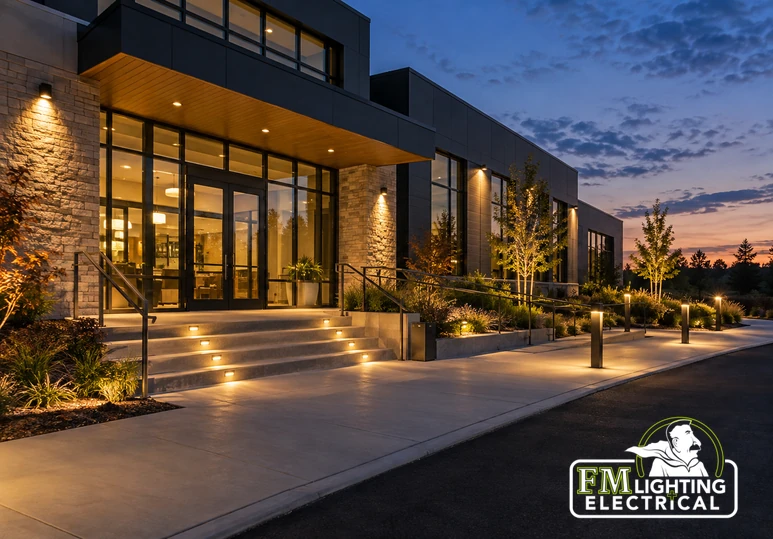
.jpg "Interior vs Exterior Lighting: What Property Owners Should Prioritize First?")
.jpg "Lighting Installation vs Lighting Retrofit: Which Option Is Right for Your Property?")