
WHAT PROFESSIONAL LIGHTING DESIGN INVOLVES
Lighting design is more than choosing fixtures. It starts with understanding how a space is used, who uses it, and what the lighting needs to accomplish at different times of day.
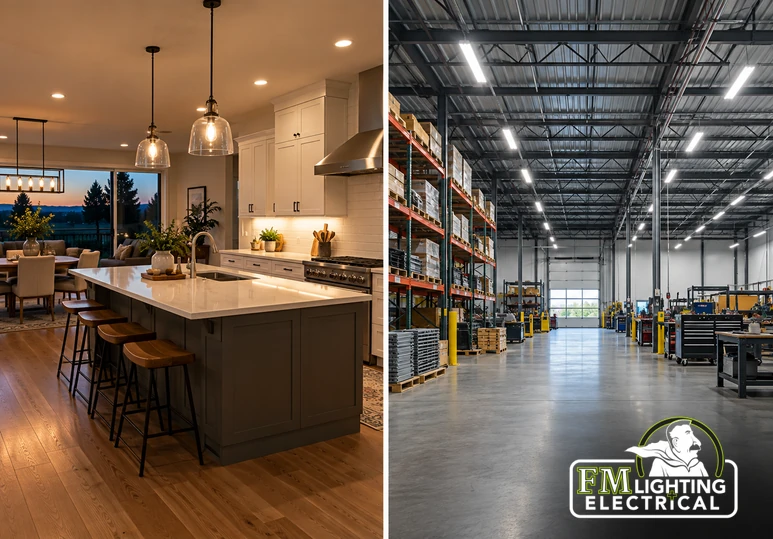
A designer typically looks at the layout, ceiling heights, surfaces, natural light, and the activities that take place in each area. An office needs lighting that supports computer work and meetings. A warehouse needs dependable illumination around aisles, shelving, and loading areas. A home may need flexible lighting that changes from morning to evening.
From there, a plan can combine different types of light. Ambient lighting provides general illumination, task lighting supports specific activities, and accent lighting draws attention to features. Controls such as dimmers, sensors, and timers can then be added to suit how the property operates.
A lighting design plan may consider:
- Room layout
- Fixture types
- Fixture placement
- Brightness levels
- Colour temperature
- Lighting controls
- Natural daylight
- Future changes
Planning before installation can help avoid common problems such as glare, dark spots, uneven brightness, and fixtures that end up in the wrong places.
SAFETY, EFFICIENCY, AND APPEARANCE
The value of lighting design shows up in three areas that matter to most property owners.
Safety and visibility come first. Well-lit stairways, hallways, entrances, walkways, and parking areas can make it easier for people to see where they are going. Lighting that is too dim, too harsh, or poorly aimed can make spaces harder to use.
Efficiency is another consideration. Modern LED fixtures and lighting controls can help reduce unnecessary energy use when they are matched to how a space is used. The results depend on the existing system, operating hours, and the type of upgrade.
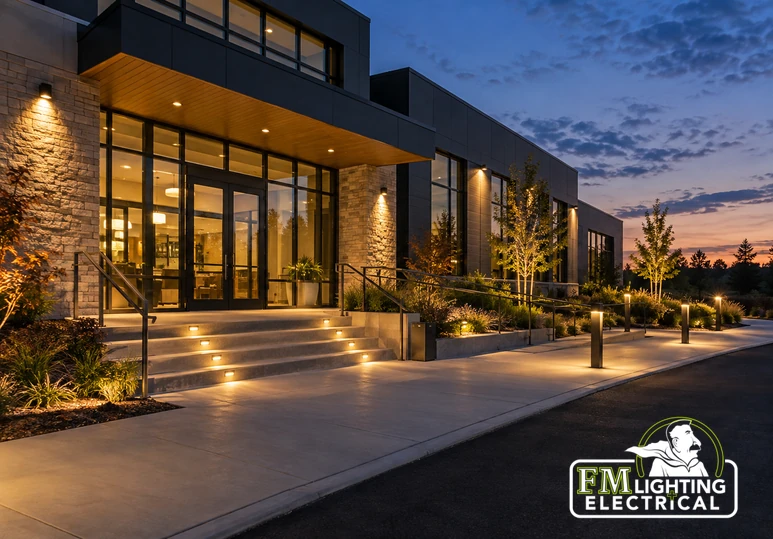
Appearance also matters. Lighting influences how a space feels, how finishes and colours look, and how welcoming a property appears, whether it is a lobby, a retail floor, a living room, or a building exterior after dark.
Well-planned lighting can support:
- Clear visibility
- Comfortable spaces
- Safer movement
- Energy-conscious operation
- Reduced glare
- Attractive finishes
- Highlighted features
- Better first impressions
Lighting is best planned as a whole. A single bright fixture in the wrong place rarely solves a problem that comes from the overall layout.
WHEN TO INVEST IN LIGHTING DESIGN
Professional design can be especially useful at certain points in a property's life.
Renovations and new construction are natural times to plan lighting, since wiring, switches, and fixture locations are easier to coordinate before walls and ceilings are finished. Changes to layout, furniture, shelving, or workstations can also make an existing lighting plan less effective.
Older properties may benefit as well. Fixtures that flicker, fail often, produce uneven light, or no longer suit the space may be worth reviewing as part of a broader plan rather than replaced one at a time.
Consider lighting design if:
- You are renovating.
- You are building new.
- Areas feel too dark.
- Glare is a problem.
- Fixtures fail often.
- Energy use is a concern.
- The space has changed.
- Curb appeal matters.
A lighting assessment can help identify inadequate illumination, aging equipment, and opportunities to improve controls, so upgrades can be prioritized by need and budget.
FM Lighting & Electrical can assess your property and recommend practical lighting design improvements based on its layout, condition, and how it is used. Contact FM Lighting & Electrical to discuss lighting design in Calgary for your home or business.
FAQs
Q: WHAT IS LIGHTING DESIGN?
A: Lighting design is the process of planning fixtures, placement, brightness, and controls around how a space is used. The goal is to provide the right light in the right places, rather than simply adding more fixtures.
Q: WHEN SHOULD I HIRE A PROFESSIONAL FOR LIGHTING DESIGN?
A: Professional design is often helpful during renovations, new construction, or when existing lighting causes problems such as dark areas, glare, or frequent fixture failures. Planning early makes it easier to coordinate wiring, switches, and fixtures.
Q: CAN LIGHTING DESIGN HELP REDUCE ENERGY USE?
A: It can help. LED fixtures, sensors, timers, and dimmers may reduce unnecessary electricity use when matched to how a space is used. FM Lighting & Electrical can assess your existing system and recommend upgrades that support improved efficiency.
.jpg "Interior vs Exterior Lighting: What Property Owners Should Prioritize First?")
.jpg "Lighting Installation vs Lighting Retrofit: Which Option Is Right for Your Property?")