WHY RESIDENTIAL LIGHTING CAN ADD VALUE TO YOUR HOME
Lighting is sometimes treated as a finishing detail during a renovation, but it has a major influence on how people experience a home. Even a beautifully renovated room can feel dark, cramped, or unfinished when lighting is poorly positioned.
Modern residential lighting can make spaces feel brighter, cleaner, and more inviting. It can also draw attention toward features homeowners want people to notice, including fireplaces, cabinetry, artwork, vaulted ceilings, architectural details, and kitchen islands.
Lighting can contribute to home value in several ways. It improves functionality, modernizes older spaces, enhances curb appeal, and can make a strong impression during a future sale. Energy-efficient LED lighting may also appeal to homeowners who want to reduce electricity consumption and ongoing maintenance.
Effective residential lighting generally combines several layers rather than relying on one fixture in the middle of the ceiling.
Ambient lighting provides the room's primary illumination.
Task lighting provides additional brightness where specific activities take place.
Accent lighting highlights architectural or decorative features.
When these three layers work together, rooms can become more comfortable and visually interesting without feeling excessively bright.
10 RESIDENTIAL LIGHTING DESIGN IDEAS THAT CAN IMPROVE YOUR HOME
1. UPGRADE TO MODERN LED POT LIGHTS
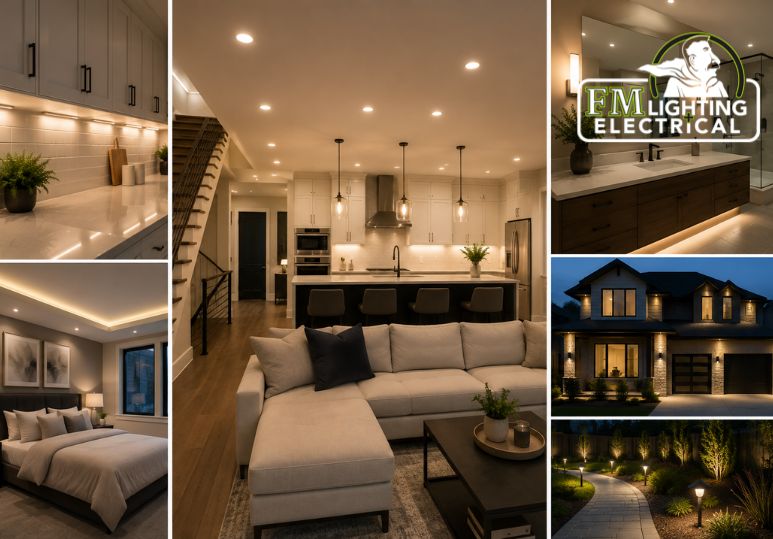
Recessed LED lighting can provide clean, evenly distributed illumination without taking attention away from the rest of the room.
Pot lights work particularly well in kitchens, living rooms, basements, hallways, and other areas where homeowners want consistent overhead lighting. Replacing older fixtures with modern LED options can also reduce energy consumption and maintenance requirements.
Placement matters. Installing too many pot lights can make a room unnecessarily bright, while poor spacing may create dark areas. Professional lighting design considers ceiling height, room dimensions, furniture placement, and natural light before determining fixture locations.
2. ADD UNDER-CABINET KITCHEN LIGHTING
Kitchen lighting should provide more than general ceiling illumination. Under-cabinet lighting directs light onto countertops, making food preparation and other everyday tasks easier.
It can also give kitchens a more sophisticated appearance by adding another layer of light beneath cabinetry. Modern LED strips and low-profile fixtures can provide effective illumination while remaining discreet.
For homeowners planning kitchen renovations, under-cabinet lighting is a relatively small detail that can make the finished space feel considerably more complete.
3. USE STATEMENT LIGHTING OVER KITCHEN ISLANDS
Kitchen islands naturally become focal points, making them excellent locations for decorative lighting.
Pendant fixtures can add character while providing useful task lighting over food preparation and seating areas. The size and number of fixtures should complement the island rather than overpower it.
Statement lighting can also be used above dining tables, staircases, and in entryways where there is enough space for a larger fixture.
4. INSTALL DIMMER SWITCHES
Different activities require different amounts of light. A brightly illuminated living room may work well during cleaning or entertaining but feel excessive when watching television in the evening.
Dimmers give homeowners greater control over brightness without requiring multiple lighting systems.
They can be especially useful in:
- Bedrooms
- Living rooms
- Dining rooms
- Kitchens
- Entertainment areas
- Basements
Dimming compatible LED fixtures can also help reduce unnecessary electricity consumption when full brightness is not required.
5. HIGHLIGHT ARCHITECTURAL FEATURES
Accent lighting allows homeowners to direct attention toward the most attractive elements of their property.
A fireplace, stone feature wall, artwork, shelving, vaulted ceiling, or architectural niche can become more visually prominent with carefully positioned lighting.
Wall washing and directional fixtures are particularly effective because they add depth and dimension instead of illuminating every surface equally.
6. IMPROVE BATHROOM LIGHTING
Bathrooms benefit greatly from layered lighting. A single ceiling fixture can create shadows around mirrors and make grooming tasks more difficult.
Combining overhead illumination with properly positioned vanity lighting can provide more balanced visibility.
Modern bathroom lighting can also contribute to a cleaner, spa-inspired atmosphere. Warm, comfortable illumination can make bathrooms feel more relaxing, while brighter task lighting provides visibility when needed.
7. CREATE BETTER BEDROOM LIGHTING
Bedrooms should feel comfortable rather than excessively bright. Layered lighting makes it possible to create different environments throughout the day.
General ceiling lighting can provide visibility when necessary, while bedside fixtures or wall-mounted lights provide softer illumination for reading and relaxing.
Dimmers can add even greater flexibility, allowing homeowners to adjust brightness according to the time of day.
8. UPGRADE BASEMENT LIGHTING
Basements often have limited natural light, making lighting design particularly important.
Properly positioned LED pot lights can make basement spaces feel brighter and more open. Additional task and accent lighting can then define entertainment areas, home offices, bars, gyms, or other functional zones.
For developed basements, improving the lighting can make the space feel like a natural extension of the home rather than a separate lower level.
9. IMPROVE EXTERIOR AND LANDSCAPE LIGHTING
Residential lighting does not stop at the front door. Exterior illumination can improve curb appeal while making walkways, entrances, stairs, and outdoor living areas easier to navigate after dark.
Exterior lighting can be used around:
- Front entrances
- Garages
- Pathways
- Patios
- Decks
- Landscaping
- Architectural features
A carefully designed system should provide useful illumination without making the property unnecessarily bright. Strategic placement can highlight the home's architecture while creating a welcoming appearance from the street.
10. ADD SMART LIGHTING CONTROLS
Smart lighting gives homeowners greater control over when and how different fixtures operate.
Depending on the system, lights may be controlled through switches, schedules, sensors, or compatible smart-home technology. Homeowners can create different lighting settings for entertaining, relaxing, working, or nighttime use.
Smart controls can also help reduce wasted electricity by ensuring lights are not left operating unnecessarily.
PLAN YOUR RESIDENTIAL LIGHTING AROUND HOW YOU USE YOUR HOME
The best residential lighting design is not necessarily the system with the most fixtures. It is the one designed around the people using the space.
Before upgrading lighting, homeowners should consider what happens in each room, where furniture is positioned, how much natural light is available, and which features deserve additional attention. A kitchen requires different lighting than a bedroom, just as an exterior pathway requires a different approach than a living room.
Professional planning becomes particularly valuable during renovations, basement developments, kitchen upgrades, and larger home improvement projects. Making lighting decisions early allows switches, wiring, fixtures, and controls to be incorporated into the overall design rather than added as an afterthought.
Homeowners should also think beyond appearance. Fixture efficiency, colour temperature, brightness, placement, controls, and long-term maintenance all influence how successful a lighting upgrade will be.
For Calgary homeowners, a well-designed lighting system can improve both everyday enjoyment and the overall presentation of a property. FM Lighting & Electrical can help homeowners evaluate existing lighting and develop residential lighting solutions suited to their property's layout, style, and functional needs.
FAQs
Q: WHAT TYPE OF LIGHTING ADDS THE MOST VALUE TO A HOME?
A: There is no single fixture that adds the most value to every property. Improvements that make the home brighter, more functional, energy efficient, and visually appealing tend to provide the greatest benefit. LED pot lights, kitchen task lighting, modern fixtures, bathroom lighting, exterior lighting, and dimmer controls can all contribute to a more updated appearance. The best upgrades depend on the home's existing lighting and which spaces need improvement.
Q: HOW DO I PLAN RESIDENTIAL LIGHTING FOR A RENOVATION?
A: Start by considering how each room will be used and where furniture, cabinetry, work surfaces, and architectural features will be located. From there, plan a combination of ambient, task, and accent lighting. Fixture placement, switching, dimmers, electrical requirements, and natural light should also be considered before construction begins. Planning early can reduce the need to make compromises after walls and ceilings have been completed.
Q: SHOULD I HIRE A PROFESSIONAL FOR RESIDENTIAL LIGHTING DESIGN?
A: Professional assistance can be particularly valuable when installing new fixtures, changing electrical wiring, renovating several rooms, developing a basement, or creating a complete lighting plan. An experienced lighting professional can recommend fixture locations and lighting strategies based on the home's layout and intended use. Contact FM Lighting & Electrical to discuss residential lighting design and installation options for your Calgary home.
.jpg "Interior vs Exterior Lighting: What Property Owners Should Prioritize First?")
.jpg "Lighting Installation vs Lighting Retrofit: Which Option Is Right for Your Property?")