WHY COMMERCIAL LIGHTING UPGRADES SAVE MORE THAN ELECTRICITY
Lighting is often one of the largest contributors to a commercial building's electricity consumption. Many businesses continue operating fluorescent, metal halide, or high-pressure sodium fixtures that use considerably more power than modern LED alternatives. While these systems may still function, they can create unnecessary operating expenses year after year.
A professional lighting assessment identifies areas where energy efficiency can be improved without sacrificing brightness or workplace safety. Many businesses discover that outdated fixtures are illuminating unused spaces, operating longer than necessary, or producing uneven lighting that reduces comfort and productivity.
Modern commercial lighting upgrades can provide benefits such as:
- Lower monthly utility bills
- Reduced maintenance costs
- Longer fixture lifespan
- Improved employee comfort
- Better customer experience
- More consistent light output
- Enhanced workplace safety
- Reduced environmental impact
Businesses across Calgary may recover much of their investment through lower operating costs while benefiting from a building that performs more efficiently every day.
10 COMMERCIAL LIGHTING UPGRADES THAT REDUCE ENERGY COSTS
1. CONVERT FLUORESCENT FIXTURES TO LED
LED technology uses less electricity while producing brighter and more consistent lighting. LEDs also typically last longer than fluorescent tubes, helping reduce replacement and labour costs.
2. INSTALL OCCUPANCY SENSORS
Meeting rooms, washrooms, storage rooms, and warehouses often remain lit even when empty. Occupancy sensors automatically turn lights off when spaces are not in use.
3. ADD DAYLIGHT HARVESTING CONTROLS
Buildings with large windows can automatically dim interior lighting when natural daylight is available, reducing unnecessary energy consumption throughout the day.
4. UPGRADE PARKING LOT LIGHTING
Replacing outdated exterior fixtures with LED parking lot lighting can improve visibility while lowering overnight operating costs.
5. INSTALL SMART LIGHTING CONTROLS
Centralized lighting systems allow facility managers to schedule lighting, monitor usage, and adjust brightness throughout the building from a single interface.
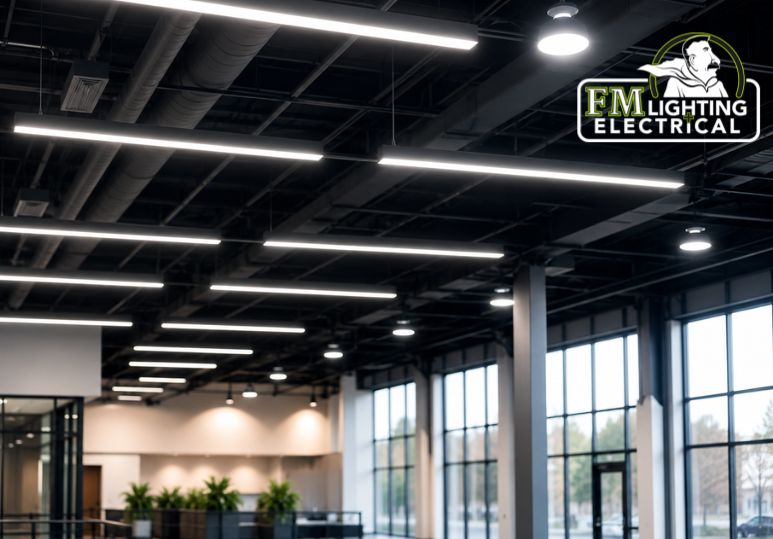
6. REPLACE METAL HALIDE HIGH-BAY FIXTURES
Warehouses and manufacturing facilities may benefit from high-efficiency LED high-bay fixtures that consume less power while improving visibility and workplace safety.
7. UPGRADE EMERGENCY LIGHTING
Modern emergency lighting systems use less electricity during standby operation while providing reliable illumination when needed.
8. IMPROVE SIGNAGE LIGHTING
Replacing older sign lighting with LED systems can help businesses improve visibility while reducing maintenance and energy expenses.
9. INSTALL MOTION-CONTROLLED EXTERIOR LIGHTING
Loading docks, service entrances, and storage yards can remain illuminated when needed while minimizing electricity use through motion-activated lighting.
10. SCHEDULE PREVENTIVE LIGHTING MAINTENANCE
Dirty fixtures, aging ballasts, damaged wiring, and failing components can reduce efficiency. Routine maintenance helps commercial lighting systems operate properly while identifying problems before they become more expensive.
CHOOSING THE RIGHT COMMERCIAL LIGHTING PARTNER IN CALGARY
Every commercial building has different lighting requirements based on its size, layout, occupancy, and operating hours. Offices, retail stores, industrial facilities, restaurants, educational buildings, healthcare facilities, and warehouses each require customized lighting solutions that balance efficiency, safety, and performance.
An experienced commercial lighting contractor begins with a comprehensive evaluation of the existing system before recommending upgrades that may deliver measurable savings. Rather than replacing everything unnecessarily, the goal should be to prioritize improvements that provide the greatest value for the property.
Professional commercial lighting services may include:
- LED retrofits
- New lighting installation
- Interior lighting upgrades
- Exterior lighting upgrades
- Parking lot lighting
- Warehouse lighting
- Office lighting
- Retail lighting
- Signage lighting
- Smart lighting controls
- Preventative maintenance
- Energy-efficiency consultations
Proper installation helps ensure lighting systems comply with applicable electrical requirements while supporting reliability and long-term performance. Businesses may also benefit from reduced downtime and fewer maintenance interruptions after upgrading to modern lighting technologies.
Commercial lighting upgrades are more than an energy-saving project. They can improve workplace safety, enhance customer experiences, support employee productivity, and help businesses control operating costs for years to come. Contact FM Lighting & Electrical to learn how commercial lighting upgrades may benefit your Calgary property.
FAQs
Q: HOW MUCH CAN A BUSINESS SAVE BY UPGRADING TO LED LIGHTING?
A: The amount a business can save depends on the age of its current lighting, the number of fixtures, operating hours, electricity rates, and the type of upgrade completed. Properties that use older fluorescent, metal halide, or high-pressure sodium fixtures may see more noticeable reductions in electricity and maintenance costs. A professional lighting assessment can compare the current system with recommended upgrades and help estimate potential long-term savings.
Q: DOES A COMMERCIAL LIGHTING UPGRADE REQUIRE REPLACING EVERY FIXTURE?
A: Not always. Some properties may benefit from a complete fixture replacement, while others may only need LED retrofits, new lamps, upgraded controls, occupancy sensors, or targeted improvements in high-use areas. The best approach depends on the condition of the existing equipment, the building layout, and the business's energy goals. A lighting contractor can identify which components should be retained, upgraded, or replaced.
Q: HOW LONG DOES A COMMERCIAL LIGHTING UPGRADE TAKE?
A: Project timelines vary depending on the size of the property, the number of fixtures, the type of lighting being installed, and whether additional electrical work is required. Smaller offices or retail spaces may be completed relatively quickly, while warehouses, parking lots, and larger facilities may require a phased installation. Planning the work around business hours can help reduce disruptions to employees, customers, and daily operations.
.jpg "Interior vs Exterior Lighting: What Property Owners Should Prioritize First?")
.jpg "Lighting Installation vs Lighting Retrofit: Which Option Is Right for Your Property?")